Seeing the World Again
#I began my career as a professional photographer. Well, in a sense. My friend Joel had jerry-rigged a darkroom in his basement, and had bought equipment, including a used enlarger, at a local camera shop, and we started going to football games and other school events with our cameras, offering to take photos of our classmates (usually couples) and bring them freshly made prints of the best shots. I can't remember how much we charged, but we offered options: 5x7, 8x10, pocket-sized.
It was really Joel's gig, his idea and his equipment; I was merely his assistant. But I learned a lot, in those days, about how to develop photographs, what kind of paper to use, how to get the best levels of contrast, how to judge the moment to remove a print from the developer and drop it in the fixer. And I spent a lot of time practicing my picture-taking skills, learning how to vary exposure and shutter speed to achieve different effects. I thought a great deal about composition and flattered myself that I could find an interesting framing of an undistinguished scene.
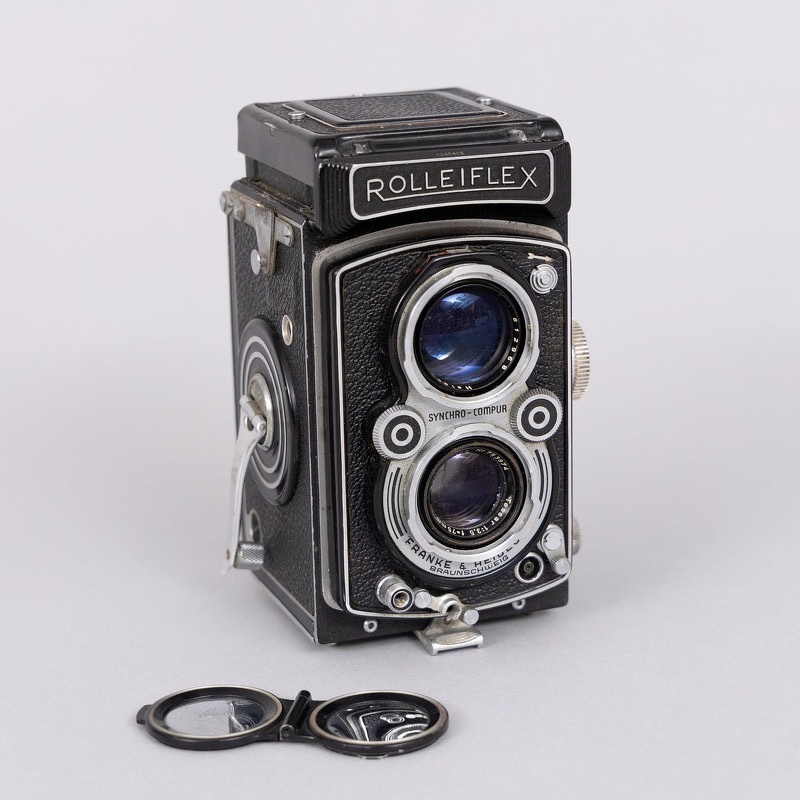
Joel and I loved that little camera shop out on Roebuck Parkway, and I think the owner, who had an impressive selection of used cameras and other equipment, was sufficiently pleased to see a couple of teenagers haunting his shop with such ardor that he cut us some deals. Joel had a Minolta SLR, if I remember rightly, but I decided that I really wanted a Rolleiflex. Those were considered wildly out of date at that time, but something about it — the square format, the larger negative, composing by looking down into a viewfinder — was deeply appealing to me. Very few people took square photos in those days, and would not until Instagram came around, but I've preferred that format for more than fifty years now.
About one thing Joel and I were purists: we worked only in black-and-white, and took almost all of our pictures on Tri-X Pan. The people to whom we sold our photos always wanted color, and I don't think we could have explained to them the depths of our commitment to monochrome, so we just told them that color photos would be more expensive. (And indeed Joel probably couldn't have afforded the equipment to make color prints; I certainly couldn't have.) But even if we could have afforded colors we would have declined the use of it, on principle.
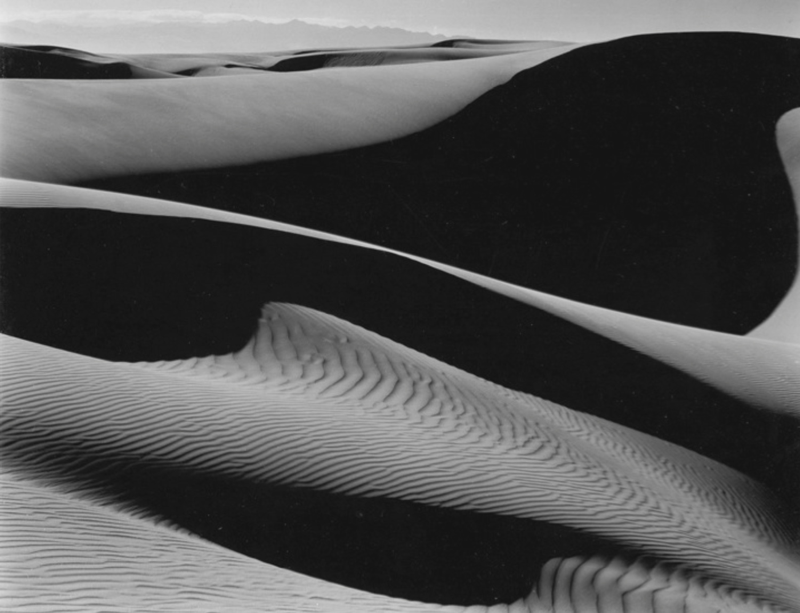
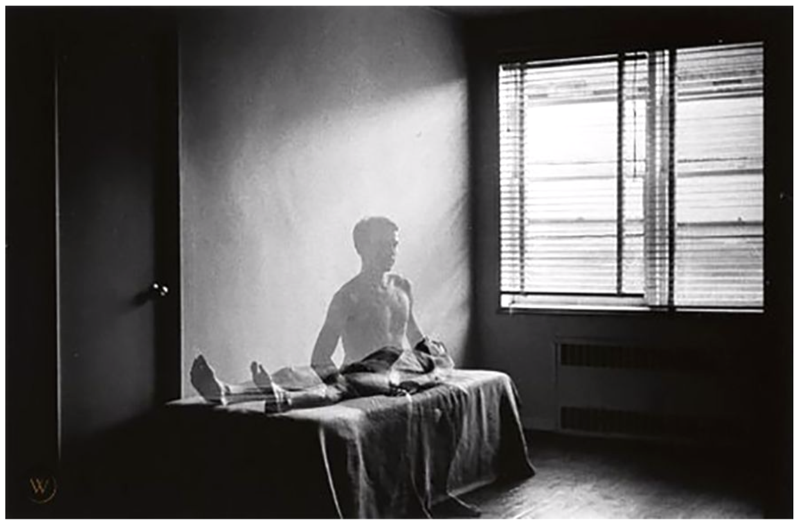
We spent hours and hours poring over the books of and about photography that we checked out from the East Lake Public Library, and developed a pantheon of heroes: for Joel Ansel Adams was the king of kings, but I preferred Edward Weston. (Weston was the right role model for a guy with a Rolleiflex.) We were not hidebound traditionalists — we spent a lot of time trying to reproduce some of the double-exposure effects of the great experimentalist Duane Michals — but were were traditionalists.
When I was sixteen I discovered the work of Cartier-Bresson, and from that moment no other photographer could compete for my devotion.
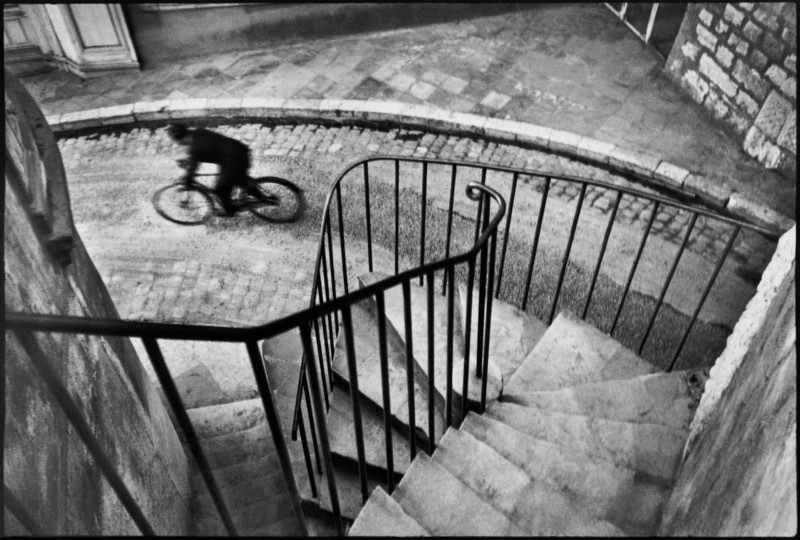
I traded in my Rolleiflex for a Pentax SLR — no Leicas were within my price range, and in any case I feared that I would be unable to master the art of shooting with a rangefinder. But I discovered that if there were appropriate subjects for Cartier-Bresson-like photographs in Birmingham, Alabama, I didn't know how to find them. I grew discouraged, and eventually became a mere shooter of snapshots.
But allowing serious photography to pass out of my life, mostly, was, I now think, a mistake. I'm still, I think, a better-than-average snapshooter, but in my retirement I really want to become a photographer again. We'll see whether I manage it.
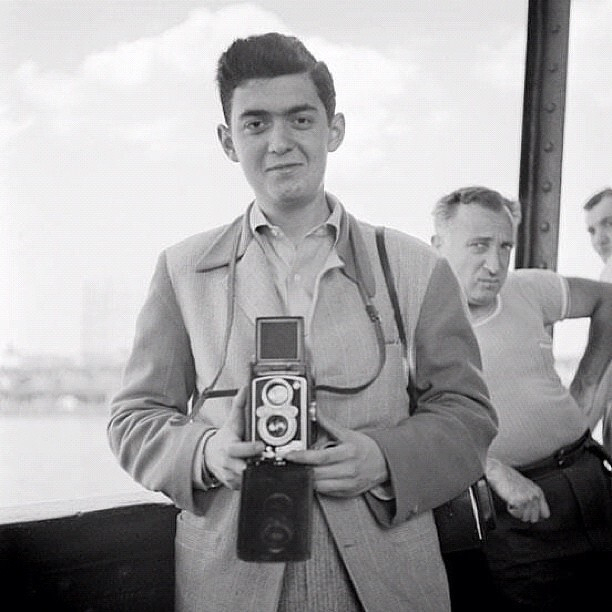
P.S. A cool guy with his Rolleiflex, even if the gentleman behind him isn’t impressed: