"Why do you hate the South?"
#I’m only going to do this once.
First, some perspective. As I have written on several occasions — I say that in case some of you think “Wait, I’ve heard this before” — one of my most regular riffs for my students goes like this: A number of years ago I met a woman from Kingston, Jamaica who in her high school days had won a prize for Best English Essay. That prize was given her by a visiting dignitary, who happened to be T. S. Eliot. T. S. Eliot’s paternal grandmother, Abigail Adams Eliot, clearly remembered her great-uncle, John Adams (for whose wife she was named). And when John Adams was a young man in Paris, he met Voltaire, a man born in the 17th century.
You can get back to what we think of as the distant past in a hurry: to the 17th century in six steps. This is one of the chief reasons why Gavin Stevens, the character who serves as a kind of stand-in for Faulkner in the Snopes trilogy, is right to say that “The past is not dead; it is not even past.” Our history reverberates into our present. The fathers have eaten sour grapes and the children’s teeth are set on edge; so says the Word of the Lord.
That’s the first thing you have to know to understand the American South. The second thing you need to know is that the white South is a clan-based social order, in which “my people,” “our people,” are almost everything. To understand why this is, reflect on the point about history I have just made and then read the “Borderlands to the Backcountry” chapter of David Hackett Fisher’s Albion’s Seed.
If any non-Southerner confronts a white Southerner about the evils of slavery and, later, Jim Crow, the replies are selected from a very small pool. “Why don’t you worry about the evils of your own history?” “Slavery wasn’t nearly as bad as you people make out.” “Sure there were some real racists, but most people got along just fine.” Or, the maximal concession: “Sure, our society had problems, but we were working on them and would’ve gotten everything straightened out eventually if the Yankees had left us alone.” But underlying all this is a deeply embedded, so deep it only rarely finds expression, and nearly universal reaction: “How dare you suggest that your people were morally superior to my people?” (Fisher on the common perception of immigrants to Philadelphia from the Borders in the early 18th century: “The speech of these people was English, but they spoke with a lilting cadence that rang strangely in the ear. Many were desperately poor. But even in their poverty they carried themselves with a fierce and stubborn pride that warned others to treat them with respect.”)
It’s the old human story: We want to judge others according to an absolute standard, and to judge ourselves in comparison to others. (“I’m not any worse than you.”) I will now set aside the comparative questions and say this: the Old South — the South of my ancestors, for all my people for ten generations back or more are Southern — was not in any sense a land of chivalry and honor and Stoic resolution; it was instead a land of profound moral depravity. The depravity was never absolute, and it was accompanied by virtuous people and practices, but it was pervasive. The everyday horrors of slavery have been amply documented by the slaves themselves as well as by their owners, who were often proud of their cruelty; it is only within my lifetime that a white man could reliably be convicted in court for raping a black woman or for killing a black man — or, indeed, for killing a white man who tried to protect a black teenage girl; there are people alive today who still remember an era when, throughout the South, lynchings would be scheduled in advance, advertised in the newspapers, and attended by hundreds or even thousands of delighted spectators. None of these actions was universally approved; none was uncommon or untypical either. They were ordinary events, ordinary experiences, in a sick society, a twisted and perverse culture. That there have been even more corrupt societies in human history is not to the point. No morally sane person would want to restore such a society in any form.
When I say things like this, some people reply that I am “ashamed” of being a Southerner or — as Shreve McCammon accuses Quentin Compson at the end of Absalom, Absalom! — that I hate the South. I am speaking the simple truth when I say that I do not understand these statements. I don’t get the concept of being ashamed, or for that matter proud, of the place you were born. (I feel the same incomprehension when people say they’re “proud to be an American.”) I feel proud of my son when he exhibits good character — as he often does — and of my wife when she is kind and compassionate towards those in need — as she regularly is. I feel pleased and satisfied when I have done good work. I am often ashamed when I reflect on the long list of sins and stupidities I have amassed in my life. But I do not know what it would even mean to be either proud or ashamed of being a Southerner, nor can I grasp the idea of “hating” the South. “The South” is comprised of a million things, some of which I admire, some of which I detest, some of which make me laugh — and all of which are in one way or another constitutive of me.
I am at ease in a world that has a good many black people in it, simply because I grew up in such a world. It feels justly proportioned, whereas the almost exclusively white world I lived in for decades in Wheaton, Illinois never ceased to feel unbalanced to me. Similarly, even though I now live in Texas I continue to think that the normal things to barbecue are pork shoulder and ribs, and if you were to tell me that you had recently eaten fish the image that would come to my mind is cornmeal-battered catfish. While I admire beyond measure the great Scotch whiskies, a fine bourbon sings the song of my heart. It would be slightly embarrassing to count how many books about the Beatles I have read, and I listen to their records all the time, but there are vast regions of my soul that they cannot touch, that belong instead to Waxahatchee singing Lucinda Williams’s “Fruits of My Labor” or Leon Bridges singing “River” or Emmylou Harris singing “From Boulder to Birmingham.” Ralph Stanley: “O Death.” Going even further back: the Carter Family’s “Wildwood Flower,” though I admit to a special love for Bill Frisell’s instrumental version. Louis Armstrong — the roots are going very deep here — playing and singing “St. James Infirmary.” The world of contemporary Christian music is alien to me, but a few months ago at Laity Lodge Sandra McCracken sang “All Ye Refugees” and it went straight through me like a knife. That’s gospel — that’s the Gospel, and in a mode that resonates with generations of my DNA. I am helpless before it; your own sensibilities may be too refined for such an experience, I can’t say.
The literature of the South, especially its mid–20th-century Renaissance, was central to me once — when I was twenty I thought Absalom, Absalom! the finest novel in the world, and Flannery O’Connor the English language’s greatest writer of short stories — but to my regret I must admit that my deep fascination with such works has not lasted. I return to them rarely, though I still admire them, and maybe in my old age they’ll be meat and drink to me again. Oddly enough, I may have come to them too late, because in my most impressionable years (thirteen to eighteen) I was reading Loren Eiseley and Ursula K. Le Guin and was beginning my love affair with England and English literature, and those encounters transformed my mind. In college I started reading Sir Thomas Browne because I had been told that he was an influence on Faulkner, but soon found that I greatly preferred Browne to his Mississippian admirer. His Englishness and his Christianity alike attracted me, and from that point on I would draw little intellectual or literary nourishment from my fellow Southerners. Not none — Walker Percy remained and remains a strong, wry voice in my head — but little.
(Wendell Berry I think of more as a farmer than a Southerner: for all his deep localism, his intellectual kinship is less with other Southerners than with people from elsewhere — Wes Jackson, Gary Snyder — who share his agricultural sensibility, his gratitude for “the gift of good land.”)
The plain fact is, I would trade the whole Southern literary tradition, wincing a bit at the departure of Lost in the Cosmos, for The Lord of the Rings or Middlemarch or the theology of Richard Hooker and Jeremy Taylor. I admit to making this a little easier for myself by seeing my fellow Alabamian and prime culture-hero Albert Murray as something other than a “Southern writer” as that phrase is usually defined.
And I sometimes wonder whether the intellectual and moral life of the white South would be stronger and healthier today, less prone to recrudescences of bigotry and moral corruption, if more Southerners had followed Murray’s example and looked beyond their own cultural resources to a broader world that could help expand the range of their thoughts, their sensibilities, and their sensitivities. They could have started by consulting their black sisters and brothers. (The blues is country music and therefore, at one remove, so is jazz. Even Ornette Coleman, maybe especially Ornette Coleman, is playing the blues.) Much — not all, but much — of white Southern culture today is a crass and parochial thing, lacking sufficient input from the wise people from other parts of the world and from the wise people of its own past. Through its lack of broad knowledge and sympathies it has made itself increasingly vulnerable to hucksters, so that now its belligerent credulity is nearly absolute.
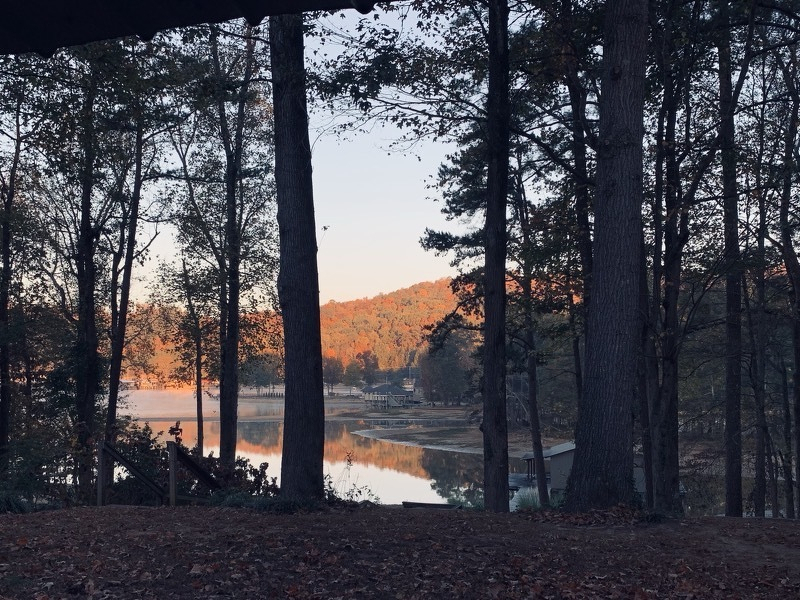
The food, the music, the vast pine forests, the big slow rivers, the many-miles-long ridges that divide the valleys there at the Southern terminus of the Appalachians — this is the South of my dreams and my imagination. (It’s perhaps worth noting that these are things that unite black and white Southerners: my old friend Charles Marsh, a theologian who grew up in Mississippi and Alabama, was once taken by a friend to a soul food restaurant in Harlem. Friend: “So what do you think about soul food?” Charles: “Where I’m from we call this food.”) All these have marked me deeply and continue to nourish me. But my primary loyalties, I find now, as my seventh decade nears its end, are with the Republic of Letters and, above all, with my fellow Christians wherever they are found. I am grateful for so much of my Alabama upbringing, but my mind is usually elsewhere, and that too is something I am neither proud nor ashamed of.
Those are my thoughts about the South, and about being a Southerner. I said that I’m only going to do this once, but I might have been lying.